
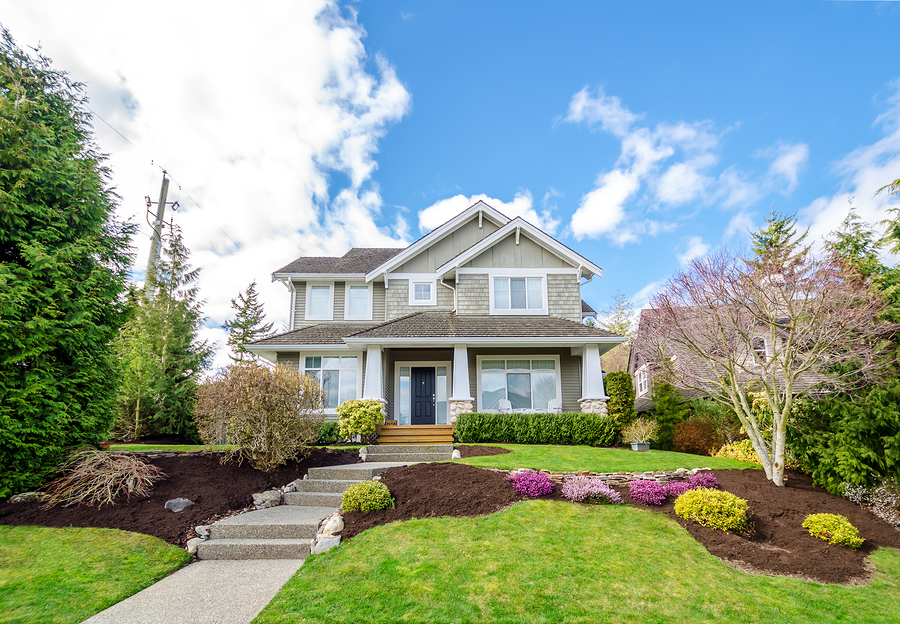
If you think homebuyers are mostly concerned with square footage and the number of bedrooms and bathrooms your property has, you’re partially wrong. Sure, these features are important, but there’s another that many sellers overlook: trees. According to surveys conducted by the National Association of Realtors (NAR), 18 percent of repeat buyers and 25 percent of new home buyers said that purchasing a residence on a wooded lot or a lot with many trees was “very important” to them.
It’s easy to understand why. In addition to producing essential oxygen and providing nesting places for birds, squirrels and a host of other wildlife, trees can substantially cut home energy costs and add value to your property.
Energy Costs – According to the USDA Forest Service, strategically placed trees can reduce your home’s air conditioning needs by 30 percent. During the colder months, these same trees can save you as much as 50 percent in heating costs. In most places, these savings add up to hundreds of dollars a year.
Property Value – The Forest Service also touts the property value benefits of trees. On average, they say that healthy, mature trees can add an average of 10 percent to your home’s value. The more mature, healthy trees your lot boasts, the higher your value and the less time your home is likely to spend on the market. According to one Forest Service study from 2010 conducted in Portland, Oregon, trees added an average of $8,870 to home sale prices and decreased market time by two days.
Getting the Most from Trees
Of course, the actual energy savings and increase in property value you’ll enjoy depends on the placement, size, species and condition of your trees as well as your geographic location.
Deciduous trees work well on the west side of a house where they can provide shade in the summer and allow the warming rays of the sun to reach the structure in the winter after they’ve lost their leaves. Evergreens are an excellent choice for the north side of a house where they can block chilling winter winds.
In general, you should think about each tree’s full-grown size and shape before you plant it. Avoid planting near power lines, as falling branches can cause power outages. And don’t plant any tree too close to your home’s foundation. Maturing roots can cause damage to the foundation and sewer lines entering your home.
While larger trees are often more attractive to homebuyers, they also cost more. A 15-foot tall evergreen might run $100 to $200 while a younger, 7-foot specimen might only cost $50 t $100. If you’re a member of the Arbor Day Foundation, you can buy sapling trees for $8 to $20—or even less.
Trees grow fairly slowly—even the fast-growing varieties may only add 15 feet over 10 years—so you’ll need to weigh factors such as how long you intend to live in your home before selling against your budget when choosing the right size trees for your purposes.
Your agent can provide you with additional information on adding value to your home with trees and other improvement projects. Please contact us today with any real estate questions.